Le Carnet articles are published in French.
DevelopersA development's microsite: what it is for and what it contains
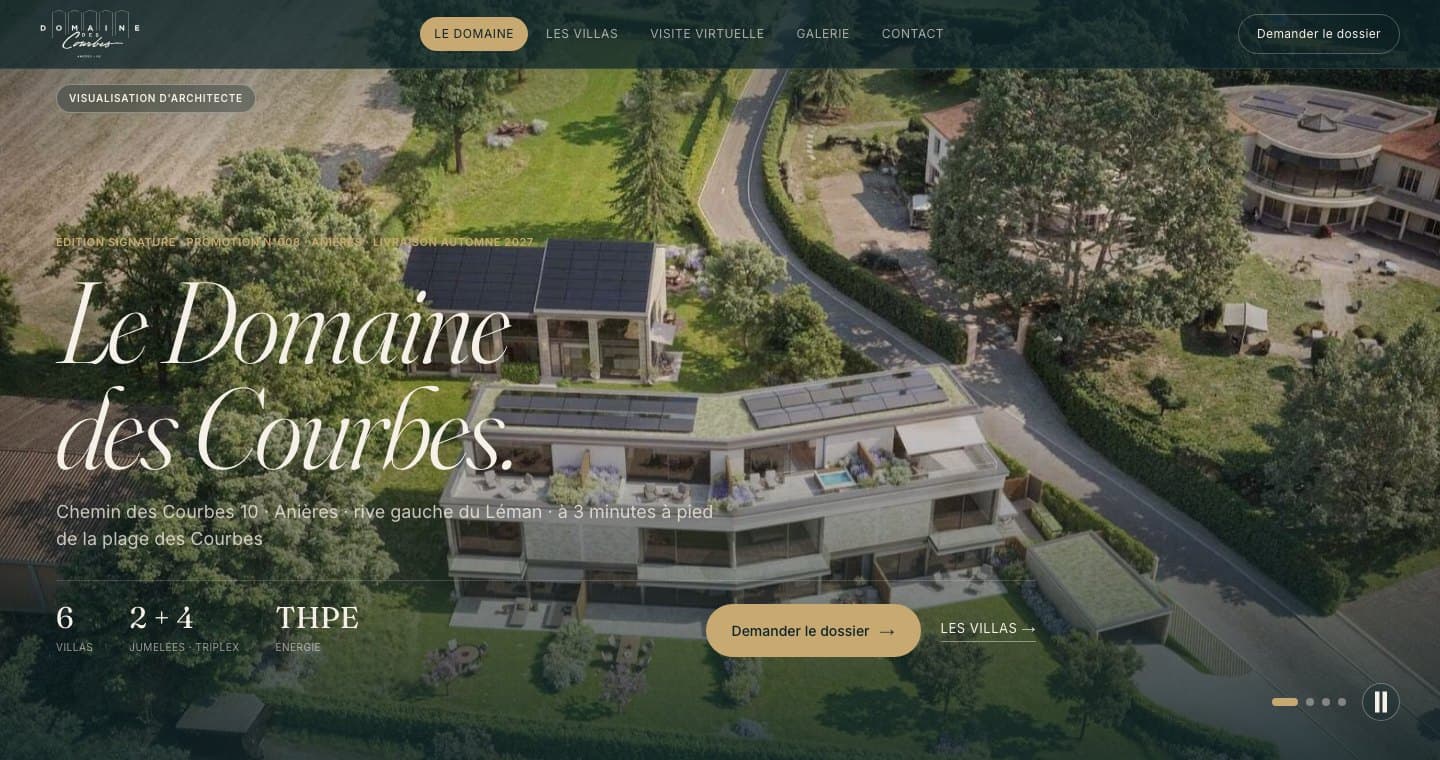
A microsite dedicated to a development brings together showcase, floor plans, availability and contact at a single address designed to convert buyers.
Contents
A development microsite is a standalone website dedicated to a single project. It brings together at one address the presentation of the project, the floor plans, the availability grid and the means of contact. Its purpose is to turn a buyer's interest into a request for an appointment, without dispersing it across generic channels.
Why a dedicated site rather than one page among others
A property development has an identity, a location and a timetable of its own. Placing it on a simple listing within a general portal means drowning it in a stream of competing ads. The microsite solves this problem by giving the project its own digital territory.
This autonomy serves several objectives. A buyer arriving on the site sees only this project, which focuses their attention. Search visibility is built around the name of the project and its neighbourhood, which makes it easier to find in Geneva. Finally, advertising campaigns point to a specific, measurable address whose traffic and enquiries can be tracked.
The microsite thus becomes the point where all marketing efforts converge. It is there that interest turns into a qualified contact.
What the microsite should contain
An effective microsite answers the questions a buyer asks, in the order they ask them. Structure comes before effects.
The first part presents the project: its location, its architecture, its positioning and the atmosphere it aims for. Carefully produced visuals, computer-generated images or photographs of the construction site, show the project even before it is delivered.
Next comes the technical part. It brings together the floor plans of the homes, floor areas, orientation and specifications. Buyers must be able to picture themselves in a specific apartment, with its dimensions and layout.
The availability grid is the operational core. It shows, unit by unit, what remains for sale, what is reserved and what has already been sold. Kept up to date, it creates a sense of transparency and a natural urgency linked to the dwindling number of units.
The last block organises contact. A short form, a phone number and the option to request a viewing or a brochure are enough. The aim remains the same: to reduce to a minimum the distance between interest and the first conversation with a broker.
Information the developer needs to prepare
The quality of the microsite depends on the material provided upstream. The developer gathers the set of plans, the technical specifications, the visuals and the description of the finishes. They specify the timetable: permit application, start of works, planned delivery.
On the commercial side, they provide the price list and the terms of sale. This data feeds the availability grid and allows brokers to respond without delay. The more complete the file at launch, the more credible the microsite is from the moment it goes live.
One point deserves attention: updates. A microsite whose availability never changes loses its purpose. The flow of information between the sales team and the site must be organised from the outset.
The location also calls for careful treatment. A neighbourhood plan, a map of amenities and a description of access help buyers place the project within Geneva life: schools, transport, shops, travel times to the centre. These elements answer questions the developer knows by heart but the buyer does not yet. Making them explicit on the microsite removes a common obstacle to the decision.
How it fits with other materials
The microsite does not work in isolation. It is part of a set-up in which every channel points back to it. Listings on property portals, social media posts, advertising campaigns and press relations all point to this single address.
This centralisation has two advantages. It simplifies tracking, since the microsite gathers enquiries from a variety of channels. It also protects the consistency of the message, with each channel using the same visuals and the same positioning as the reference site.
To understand how this set-up works as a whole, our approach to marketing a development in Geneva sets out how the various materials fit together. The microsite remains the centrepiece, the one towards which everything converges and from which the commercial relationship begins.
What a good microsite changes in practice
By the end of the journey, the buyer should have understood the project, identified a home that suits them and known how to get in touch. A microsite built in this spirit shortens the sales cycle and improves the quality of the contacts received.
For the developer, it is also a management tool. Traffic, pages viewed and the number of enquiries give a reading of real interest, project by project. This information feeds communication decisions throughout the marketing period.
A development in Geneva? Book a call with Stéphane Blatti.